
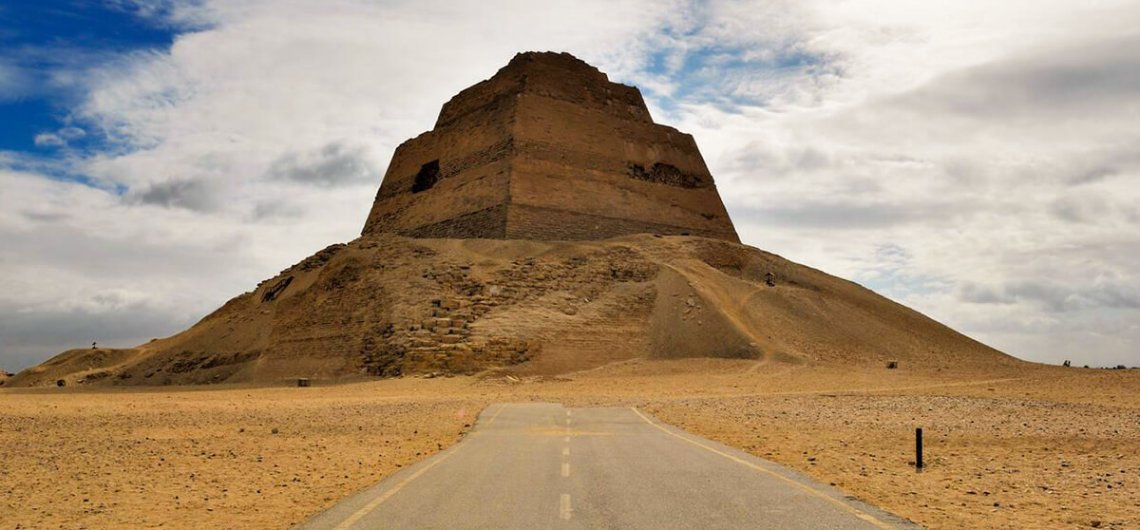
The Meidum Pyramid often remains overlooked, hidden in the shadows of its more famous counterparts. However, this lesser-known pyramid holds its own unique charm and historical significance. Its enigmatic transformation and striking architectural features make it a must-visit destination for those seeking to unravel the mysteries of ancient Egypt.
In this comprehensive guide, we embark on a journey to uncover the secrets of the Meidum Pyramid. From its historical context to its architectural wonders, we delve into the intriguing past of this underrated gem. Moreover, we provide practical tips and suggestions to ensure your visit to the Meidum Pyramid is unforgettable. So, let us set foot in the ancient sands of Egypt and embark on an adventure like no other.
The History and Significance of the Meidum Pyramid

A. Overview of the Meidum Pyramid’s historical context
The Meidum Pyramid, also known as the Pyramid of Sneferu, is located approximately 100 kilometers south of Cairo in the Fayoum region of Egypt. It was constructed during the reign of Pharaoh Sneferu, the second ruler of the Fourth Dynasty of the Old Kingdom. Sneferu, known for his ambitious building projects, sought to create monumental structures to solidify his legacy.
B. Exploration of Pharaoh Sneferu’s reign and his architectural legacy
Pharaoh Sneferu, often regarded as one of Egypt’s most prolific pyramid builders, ruled Egypt from approximately 2613 to 2589 BCE. During his reign, he initiated several construction projects, aiming to surpass the accomplishments of his predecessors. His architectural innovations and experimentation laid the foundation for the following iconic pyramids.
C. The Meidum Pyramid’s construction and transitional features
The Meidum Pyramid was initially built as a step pyramid, similar to the Djoser Pyramid at Saqqara. It was constructed using a core structure of limestone blocks and encased with a smooth layer of Tura limestone. The pyramid underwent subsequent modifications, transforming from a step pyramid into a true pyramid with smooth sides.
D. Theories and debates surrounding the pyramid’s transformation and possible collapse
The change of the Meidum Pyramid from a step pyramid to a true pyramid has been a subject of much speculation among Egyptologists. One theory suggests that the original design had flaws, leading to structural instability and collapse. Others argue that the transformation was intentional, showcasing Sneferu’s architectural experimentation and advancements.
However, with its collapsed outer layers, the exact cause of the pyramid’s present state remains debated. Some attribute it to natural causes, such as erosion and seismic activity, while others propose that human factors, such as construction techniques or deliberate dismantling, played a role.
E. The cultural and historical significance of the Meidum Pyramid
The Meidum Pyramid holds immense cultural and historical importance. It represents a pivotal period in pyramid construction, showcasing the evolution from step to true pyramids. Its unique transitional features offer valuable insights into the architectural techniques employed during the Old Kingdom.
Furthermore, the Meidum Pyramid serves as a testament to the grandeur and ambition of Pharaoh Sneferu. It reminds him of his reign’s achievements and the advancements in engineering and construction during that era. Exploring the Meidum Pyramid allows us to connect with the ancient past, providing a glimpse into ancient Egypt’s ingenuity and artistic prowess.
In addition, the pyramid’s location within the Fayoum region allows visitors to appreciate the surrounding natural beauty and experience the serene atmosphere that once embraced this ancient wonder. The Meidum Pyramid, though less visited than its counterparts at Giza, offers a unique and immersive experience for travelers seeking a deeper understanding of Egypt’s rich cultural heritage.
As we unravel the history and significance of the Meidum Pyramid, we gain a profound appreciation for the architectural accomplishments of ancient Egypt and the enduring legacy of Pharaoh Sneferu. Let us now proceed to discover the wonders that await us within the chambers and corridors of this remarkable structure.
Unveiling the Mysteries: What to Expect at the Meidum Pyramid

A. location and accessibility of the Meidum Pyramid
The Meidum Pyramid is situated in the western part of the Nile Delta, near the modern town of El-Maasara in the Fayoum region of Egypt. While it may be slightly off the beaten path compared to the more famous pyramids of Giza, it is well worth the visit for travelers seeking a unique and less crowded experience. The pyramid can be reached by road from Cairo, with approximately two hours travel time.
B. The architectural design and unique features of the pyramid
The Meidum Pyramid stands as a testament to the architectural ingenuity of ancient Egypt. Although it has undergone significant transformations, it retains remnants of its original design. The pyramid features a square base with sloping sides, culminating in a peak. Its initial step pyramid form transitioned into a true pyramid, with smooth sides made of limestone casing.
One unique architectural feature of the Meidum Pyramid is its internal arrangement of chambers and corridors. While some of these chambers were intended for burial, others served ritual and religious functions. Exploring the pyramid’s interior provides a fascinating glimpse into Egyptian civilization’s ancient beliefs and practices.
C. Exploring the interior chambers and corridors
As you venture inside the Meidum Pyramid, be prepared for an awe-inspiring journey into the heart of ancient Egypt. The pyramid’s interior offers a maze of passageways and chambers, each with its own story. You’ll have the opportunity to witness the intricate architectural design and experience the unique atmosphere that pervades these ancient spaces.
While access to certain areas may be limited for preservation, you can still explore several chambers and corridors. Marvel at the precision and craftsmanship of the stonework and imagine the rituals and ceremonies that once took place within these hallowed walls. It’s a chance to connect with the ancient past profoundly.
D. Examining the remnants of the outer casing and its artistic significance
One notable aspect of the Meidum Pyramid is the remnants of its outer casing. Although weathered and partially collapsed, these remnants provide valuable insights into ancient Egypt’s artistic and aesthetic sensibilities. Initially smooth and polished, the casing stones would have created a gleaming facade reflecting the sun’s rays.
While the casing stones have suffered the effects of time, their remnants still exhibit traces of the intricate hieroglyphic inscriptions and decorative motifs that once adorned the pyramid’s exterior. Examining these remnants allows us to appreciate the artistic mastery and symbolic meanings embedded within the artwork of ancient Egypt.
In conclusion, The Meidum Pyramid is an underrated gem, often overshadowed by its more famous counterparts. However, its historical significance and architectural evolution make it a fascinating destination for Egypt travelers. From its origins as a step pyramid to its transformation into a true pyramid, the Meidum Pyramid offers a glimpse into the ingenuity and advancements of ancient Egyptian builders.
To ensure a memorable visit to the Meidum Pyramid, planning is essential. Consider hiring a knowledgeable guide who can provide insights into the pyramid’s history and architecture. Dress comfortably and bring essential items such as sunscreen, water, and a camera. Respect the site and follow any guidelines provided by the authorities to preserve its integrity.
As you prepare to explore the Meidum Pyramid, remember its true beauty lies in its grandeur, the stories it holds, and the insights it provides into the ancient civilization that created it. Embrace the spirit of adventure, soak in the rich cultural heritage, and let the Meidum Pyramid leave an indelible mark on your journey through Egypt.
If you want to cruise through Nile River check out Egypt Nile River cruises
Don’t miss to check out our All-inclusive egypt vacation packages you can spend one day in egypt, check out in Egypt day tours
